
The Science of Meditation

New scientific studies on meditation liken it to a workout for your brain. When you pair meditation with a healthy lifestyle, what can’t you accomplish? And, if you look at exercise, eating right, and meditation as three legs of a healthy lifestyle stool, meditation takes the least amount of time and effort. You just need to carve out a quiet moment to get started.

Still not sure? Ponder this. Science says meditation can help you:

  • Improve your memory
  • Hone your focus
  • Increase your brain size and density
  • Increase blood flow to your brain
  • Decrease your blood pressure
  • Regulate your emotions
  • Release antibodies
  • Decrease stress
  • Improve your mood
  • Be less bothered by physical pain

Continue reading

The Room Around You

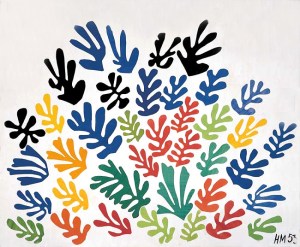
Last week, I went to the Museum of Fine Arts in Boston to see Matisse in the Studio. The exhibit shows the objects Matisse had on display in his studio and how they influenced his art. The exhibit was beautiful – which I expected. What I didn’t expect was an “ah ha” reminder of how important it is to surround yourself with things you think are cool, that make your happy, and that inspire you.

On the left is a part of a gorgeous “curtain” Matisse had in his studio to cover a large window. Imagine how the light in Nice, France would have beamed in through these cut-outs and how that might have inspired his cut-out art.


Continue reading

How can you help?

When I talk to people about organizational issues, many ask me what they can do to help friends, family, or co-workers who are disorganized. My suggestion is that they get their own lives organized, lead by example, and not worry about others. When you’re organized and you’re getting things done, your energy is infectious which is a great way to raise the energy of others around you.

That being said, it’s also vitally important that you be helpful. That you mentor and coach when you’re asked. And that you reach out and lend a hand even when you’re not asked. Continue reading

Choosing energy

It’s so easy to waste time. Look at all the temptations! TV, Netflix, Facebook, email, computer games, movies, parties, magazines… What’s your poison?

Distractions can be fun and have social elements to them, but are they the best use of your time?

It’s hard to hold the line, once and for all because your time demands and needs change. For me, the #1 reason to not do an activity is if I lose energy even thinking about it. Continue reading

When life interrupts you…

Ask Warren Buffet or Bill Gates what the most important trait is for success, and they’ll tell you “focus.”

You hear that. It totally makes sense. You think, “Of course. Do one thing at a time and really focus.” And then the phone rings. Or someone texts you. Or you get that overwhelming urge to check your email.

The focus was there, then it was gone in the blink of an eye.

Here are five prompts to help you stay focused. Continue reading

How much of your life do you choose with intent?

How much of your life do you choose? And how much is you walking down a path you’re on?

Before you roll into weekend plans, I challenge you to pause and think about what your intent is for a myriad of aspects of your life.

Did you choose, or did you happen upon:

  • Where you live
  • Who you live with
  • What you eat
  • What you do for work
  • The people you hang out with
  • What you do with your free time
  • What you watch on TV/Netflix/Hulu, et al.
  • What you read – books, magazines, newspaper, and online sites
  • How you spend other time online and/or on your phone
  • What you do for volunteer work
  • How you present yourself – what you wear, how you hold yourself, when and how you speak; is your driver fashion, comfort, to make a statement, to blend in?
  • How you decorate and keep your home – precise, comfortable, colors, textures, style, messy, neat, etc.
  • How you tend to deal with others – speaking, listening, teaching, being directive, being kind, sharing knowledge, being funny, etc.
  • How you get around – walking, biking, in a car, using mass transit, running, etc.

Continue reading

Finding harmony in your work

If you’re trying to create harmony in the work you do, it’s important to look at the platform you’re working on. When you have personal fundamentals in place, your platform is solid. If you’re missing a few fundamentals, your platform may feel tippy and stressful.

Everyone’s fundamentals are different. And your fundamentals may vary depending on the type of work you’re doing.

Organizational Exercise
Grab a piece of paper and divide it into four columns. The first column is how you think of yourself in general. The second column is for any paid work you do. The third is for volunteer work. And the last is for any fun work you do. Continue reading

Building a trusting community

When you’re not doing your best work, it’s good to question your intent and motivation. To vow to get better organized so you can get more done. To study your habits and think of ways to break bad ones and start new ones. To get healthier so you can focus better.

But if you’re doing all that and still aren’t feeling charged up and on “a path”, take a look at your community. You’re a plant trying to grow. How’s the soil, the sun, and the water where you are?

In Thank You For Being Late,” Thomas Friedman writes that when people feel “protected, respected, and connected,” the outcome is a community that fosters trust and belonging. Continue reading

Exploring the power of a connected community

I’m working my way through Thomas Friedman’s book, Thank You For Being Latefor the second time in as many weeks, and am struck by the immense power of a connected community.

  1. The amount of digital information you can learn from a computer with internet access is unlimited – with free on-line classes at Khan Academy or YouTube. Through free podcasts. By taking a MOOC (mass on-line class). Using search sites like Google. Or reading newspapers from around the world.
  2. You can join a conversation of millions through social sites like Twitter, Facebook, Instagram, or Pinterest, to effortlessly share ideas, businesses, products, and friendships with strangers from around the globe.
  3. There are no gatekeepers in an open, digital world for anything you want to create and share: products, books, music, videos, classes, and ideas.
  4. The largest hospitality group, Airbnb, owns no rooms. The largest transportation company, Uber, owns no vehicles. The largest retailer, Amazon, owns no stores. The largest content provider, Facebook, owns no content. What each group owns is a terrific, helpful vision, great software, and a global connection through the Cloud. You don’t have to own anything to have a thriving business.
  5. If you need cash for a start-up, crowd-sourcing has become business-as-usual through sites like Kickstarter, Indiegogo, and GoFundMe.

Continue reading