
Organizing at a time of grief

When I give talks on organizational Zen, my focus is on helping people think about how they want to spend their time. Part is figuring out a long-distance focus, and part is figuring out how to get there.

When we talk about what gets in the way, I often get a question along these lines:

“I lost a parent last year and ended up with all of their stuff. I’m overwhelmed. How do I get through the boxes?”

As organized as I like to be, you know what my response is? If the boxes are too heavy to lift emotionally, leave them until they feel lighter. Continue reading
All magic – and no magic potion

I was giving a talk this week on Organizational Zen and asked the participants to jot down what their intent was for attending. There are a couple of things I like about focusing on intent.

  • When you have a clear picture in your mind of why you’re doing something – whether it’s working, going to a meeting, taking a class, or having a conversation with an old friend or with a complete stranger – you listen differently. When you know what you’re looking for, you’re more attentive which makes whatever you’re doing a great use of your time. As Eckhardt Tolle says, whatever you’re doing now is the most important thing you can be doing. So choose with intent, and then show up.
  • When you don’t have a clear picture in your head of why you’re doing something and can’t for the life of you remember why you chose to be there – leave. This probably isn’t a great use of your time. Even if this is something you used to love, if you feel your energy drain even thinking about participating, it’s time to do something else.
  • When you don’t have a clear picture in your head of why you’re doing something AND you feel in your gut that this is meant to be – stay put. There’s magic at work.

Continue reading

10,000 hours

Malcolm Gladwell describes “outliers” as people who are at the ends of the spectrum – the few who stand out for their artistic success, their business acumen, or their athletic achievements. His book, Outliers, studies these winners like scientific specimens and comes to an awesome conclusion: to be successful in any field, you need smarts. You need opportunities. And mostly, you have to work hard. Really hard. Like “10,000 hours” hard.

Great artists, successful business people, and uber-athletes make what they do seem easy. It’s not. Yes, there are savants, but to be a success in any field, you have to be intentional about the work you choose to do. You have to stay focused. You have to prioritize getting your work done.

And you put in those 10,000 hours to get really, really good. Continue reading

Exploring the power of a connected community

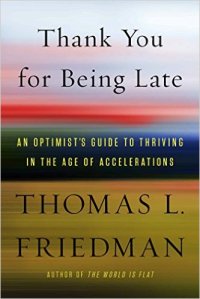
I’m working my way through Thomas Friedman’s book, Thank You For Being Latefor the second time in as many weeks, and am struck by the immense power of a connected community.

  1. The amount of digital information you can learn from a computer with internet access is unlimited – with free on-line classes at Khan Academy or YouTube. Through free podcasts. By taking a MOOC (mass on-line class). Using search sites like Google. Or reading newspapers from around the world.
  2. You can join a conversation of millions through social sites like Twitter, Facebook, Instagram, or Pinterest, to effortlessly share ideas, businesses, products, and friendships with strangers from around the globe.
  3. There are no gatekeepers in an open, digital world for anything you want to create and share: products, books, music, videos, classes, and ideas.
  4. The largest hospitality group, Airbnb, owns no rooms. The largest transportation company, Uber, owns no vehicles. The largest retailer, Amazon, owns no stores. The largest content provider, Facebook, owns no content. What each group owns is a terrific, helpful vision, great software, and a global connection through the Cloud. You don’t have to own anything to have a thriving business.
  5. If you need cash for a start-up, crowd-sourcing has become business-as-usual through sites like Kickstarter, Indiegogo, and GoFundMe.

Continue reading

And then this happened…

You’re smart.

You have a plan.

You have a vision.

You move through life making decisions and feeling in control of the direction of your life.

AND you know that stuff happens that sends you off in new directions on a pretty regular basis.

AND often, it’s long after you’re pushed off track that you look back and see that what happened was exactly what had to happen. Continue reading

You have unlimited learning potential

In the “old days,” we attended K-12 classes. Then maybe you went to college, got a degree, got a job and progressed by working hard or making lateral moves to other companies to get ahead. Throughout your career, you learned from experienced people you worked with, and maybe you got a grad degree, but even with that, you mostly had to figure things out for yourself.

thank-you-for-being-lateIn Thomas Friedman’s new book, Thank You for Being Late, he explains why this learning pattern doesn’t work in a time of super-accelerated technological change. Today, most schools don’t even teach the latest technology because things are happening faster than teachers are being educated. So how are we expected to keep up? Continue reading

Finding energy balance

I just finished reading one of Cesar Millan’s books on understanding dogs and was struck by this idea: When you’re choosing a dog, you’ll be happier in the long run not by picking a certain breed, but by picking a dog that matches your energy. I was helping place puppies last weekend at the Animal Refuge league and offered this advice to a number of folks looking at puppies – some of whom were mellow and others rowdy – and it seemed to help our visitors choose a puppy that was a good “fit”.

Afterward, I got to thinking about how this same energy assessment applies to work. If you’re at a company where everyone works 60-70 hours a week and you like spending less time at work and more at home, good luck feeling in balance. Conversely, if you have a job that requires you to sit all day and you’re high energy, you either sit and aren’t happy. Or you’re up and around all the time making it hard for others to work! I felt this when I worked for a big company that was all about the status quo when I wanted to try new things, to create change. It was a bad match! Continue reading

10 tips for healthy eating

What you eat is at the core of how you feel. And how you feel has a direct impact on your ability to get good work done.

If you’re looking for healthier ways to eat this year, here are 10 ideas to get you started. Continue reading

What’d you have for lunch today?

At the core of how we feel, how we function, and how we think is how healthy we are. If you’re not healthy, it’s hard to get  organized – and don’t even think about getting big, cool projects done!

A huge part of being healthy is eating healthy.

  • How careful are you about the food you put in your body?
  • Do you read labels and understand what the ingredients are?
  • When you go out to eat, do you know the ingredients used by the restaurant?

Continue reading